
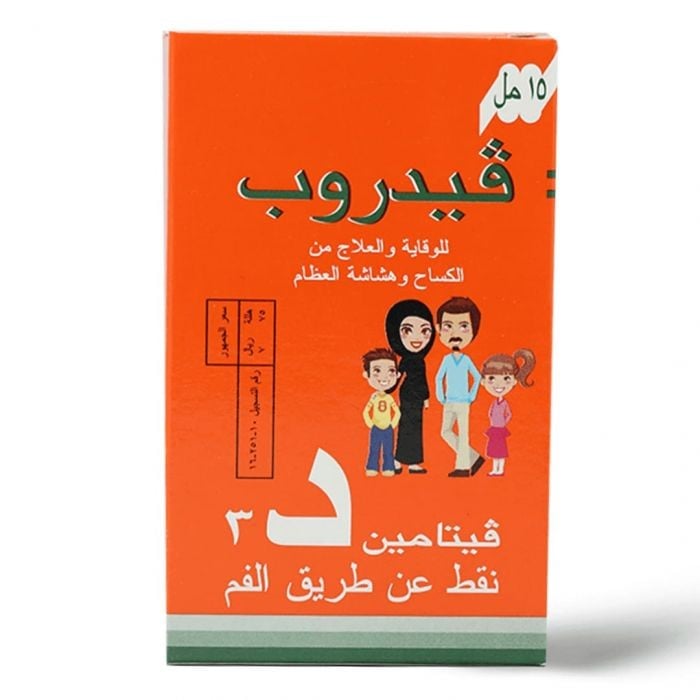
product name
- Vidrop, Oral Drops, Vitamin D Supplement, for Maintaining Bone Health - 15 ml
The scientific name
- Vitamin D drops
Vidrop oral drops belong to
- Vitamins and nutritional supplements
How vitamin D works
- Vitamin D is an essential vitamin (a fat-soluble vitamin) that has many biological benefits, some of which include increasing intestinal absorption of calcium, magnesium, and phosphate.
- Vitamin D also prevents calcium loss from the kidneys
Medical uses of Vidrop oral drops
- Supports overall health
- Helps you meet your nutritional needs and support your daily health and well-being
- Vitamin D plays a very important role in calcium absorption and metabolism, enhances immunity, and bone health.
- It is used to maintain the health of the child by supporting healthy bone growth.
- Vitamin D deficiency is more common in children, pregnant women, breastfeeding mothers, and elderly patients
How to use Vidrop oral drops
- Always take this medicine exactly as your doctor or pharmacist has told you.
- Consult your doctor or pharmacist if you are not sure.
- For children aged (0-18 years) 1-3 drops daily (400-1000 IU) or as directed by the doctor.
- Adult (19-70 years): 4-5 drops daily (1,500-2,000 IU) up to 10,000 IU daily or 5 ml (50,000 IU) weekly or as directed by physician
- Food supplements should not be used as a substitute for a varied and balanced diet.
- Doses may be changed in special circumstances, so always follow your doctor or pharmacist's instructions.
- If you take more medicine than you should, talk to your doctor or go to hospital straight away.
- If you forget to take a dose, take it as soon as you remember unless it is almost time for your next dose
- Do not take a double dose (two doses at the same time) to make up for a missed dose.
Side effects of Vidrop oral drops
- Although the following side effects are not common in everyone, some patients may report:
- Allergic reactions
- Constipation, nausea, stomach pain, diarrhea
- Hypercalcemia (high level of calcium in the blood) or hypercalciuria (high level of calcium in the urine)
Use Vidrop oral drops during pregnancy and breastfeeding
- If you are pregnant or breast-feeding, think you may be pregnant or are planning to have a baby, ask your doctor or pharmacist for advice before taking this medicine.
- Your doctor will discuss the potential risks and benefits of using this medication during pregnancy and breast-feeding
Warnings and precautions while using Vidrop oral drops
- Before using this medicine, talk to your doctor or pharmacist:
- If you are allergic to any of the ingredients of this medicine.
- If you suffer or have ever had an ulcer in the digestive system
- If you suffer from liver disease
- If you suffer from kidney failure
- If you suffer from any heart disease
- If you suffer from asthma
- If you suffer from diabetes
- If you take medications containing vitamin D3, or eat foods or milk fortified with vitamin D3
- If you are likely to be exposed to a lot of sunlight while using this medicine
- You are taking additional supplements containing calcium. Tell your doctor or pharmacist if you are taking, have recently taken, or might take any other medicines, including non-prescription medicines, prescription medicines, herbal supplements, vitamins, and nutritional supplements.
How to store Vidrop drops orally
- Store at a temperature below 25 degrees Celsius
- Do not refrigerate the medicine in the refrigerator
- Keep this medicine out of the sight and reach of children.
- Must be stored in the original packaging to protect it from moisture.
- Do not use this medicine after the expiry date stated on the carton/strip/label. The expiration date refers to the last day of the month.